
Continuity of care between visits, alongside the health workers who provide it.
Care does not stop at the clinic door. Reminders, trusted information and a clear route to a health worker can help people stay connected to care between visits.

The development challenge
Missed appointments, interrupted treatment and distance from facilities weaken continuity of care, while community health workers carry heavy caseloads.
The access barrier
Information arrives too late or not at all, follow-up depends on a visit, and people are unsure when a symptom needs a health worker.
A mother knows when her next visit is due, where to go, and who to ask if something feels wrong.
An accessible service journey, designed with the institution that owns the service.
Automate what should be automated. Escalate what requires human judgement.
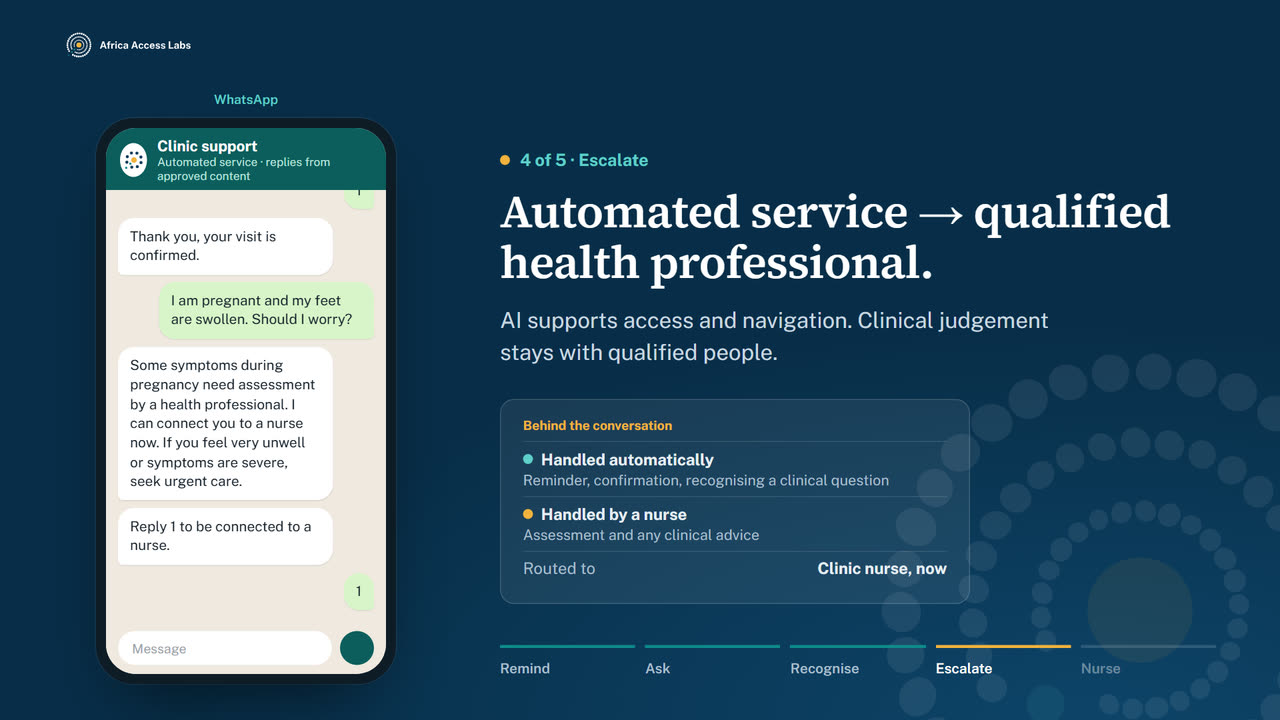
Technology never replaces clinicians. The service does not interpret symptoms or give medical advice: clinical questions, diagnoses, treatment decisions and sensitive cases always go to qualified health professionals.
Our responsible-AI principles- Appointment reminders and confirmations through everyday channels.
- Health education and service navigation from approved, clinically validated content.
- Screening and referral workflows designed with clinical partners.
- A clear route to a qualified health worker whenever a person asks, or whenever answers suggest it is needed.
- Patient feedback and public-health campaigns.
Applications
- Maternal and reproductive health engagement
- Appointment reminders
- Treatment adherence support
- Health education
- Service navigation
- Screening workflows
- Referrals
- Community health-worker support
- Patient feedback
- Public-health campaigns
What the journey could look like.
One possible journey. Steps, rules and timelines are defined with the implementing partner.
- Receives an appointment reminder
- Confirms the visit
- Asks about a symptom
- Clinical question is recognised
- Is offered a nurse
- Is connected to a nurse
What institutional partners gain
Fewer missed appointments to chase, clearer referral pathways, and health-worker time focused on the people who need it.
Relevant channels
- SMSReminders and confirmations on any phone.
- WhatsAppRicher guidance where people have it.
- Voice and human call-backHealth workers take over sensitive conversations.
Indicators partners could track
- Appointment attendance
- Adherence-support engagement
- Referral completion
- Escalations handled within agreed time
- Patient satisfaction
Design a Digital Health programme with us.
Tell us who you need to reach, what service they need and what stands in the way. We will help you design an accessible service journey and test what works.